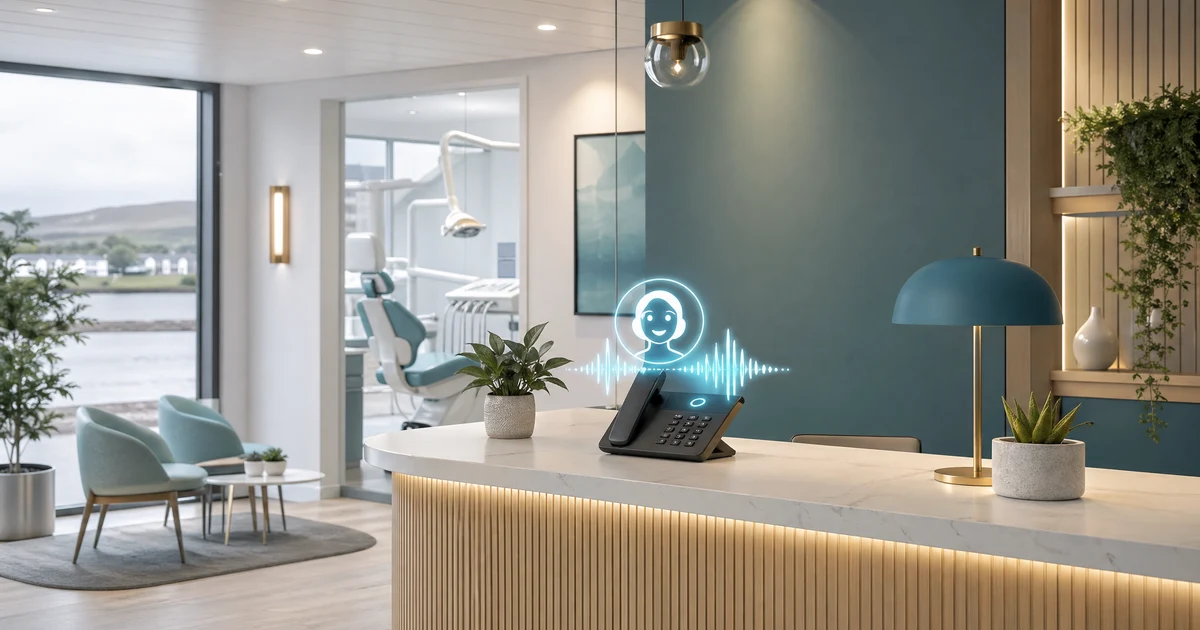
Direct answer: An after-hours answering service handles calls when an Irish business is closed or its team is unavailable. It can capture why someone called, answer approved questions, collect booking details and escalate urgent requests. VoiceFleet provides AI call coverage with configurable human handoff, while the business keeps control of clinical, legal and emergency decisions.
A patient may call about an appointment, a restaurant customer may try to reserve a table, or a tenant may report a maintenance problem after the office closes. Voicemail records a message only when the caller chooses to leave one; an answering workflow can collect the details needed for a useful next step.
This guide explains how out-of-hours phone answering works, what Irish businesses should compare and where an AI receptionist fits alongside staff.
How does an after-hours answering service work?
The business forwards unanswered or out-of-hours calls to a separate answering workflow. The service greets the caller, follows approved instructions and records the outcome. A useful setup should define:
- which questions the service may answer;
- which details it should collect;
- what counts as urgent;
- when a person must take over;
- where summaries and follow-up tasks should go.
VoiceFleet can be configured around those rules. It should not improvise clinical advice, legal advice or emergency decisions. Those calls need a clear human or emergency-services handoff.
Why do after-hours calls matter?
Demand varies by business, so the strongest evidence is your own call log. Review missed calls by hour, the reasons people call, how many leave usable messages and how quickly the team follows up. This creates a defensible baseline without relying on generic industry percentages.
Common scenarios include:
- appointment and rescheduling requests for dental or medical practices;
- restaurant booking and opening-hours questions during service;
- property maintenance reports that need a defined escalation path;
- new-client enquiries for professional and local services.
The goal is not to claim that every missed call is a sale. It is to make sure each relevant call receives a clear, recorded next step.
What is the difference between voicemail, human answering and AI answering?
Voicemail asks the caller to leave a message. A human answering service uses agents working from a script. An AI receptionist uses a configured conversation flow to answer approved questions, collect structured details and route the result.
Human teams remain the right choice for sensitive judgement and unusual cases. AI is most useful for repeatable intake, overflow and after-hours coverage. Many businesses use both: AI handles the first response and a person takes over when the rules require it.
What should an Irish business compare?
Coverage and handoff
Confirm the exact hours, overflow rules and human escalation path. A claim of 24/7 availability is useful only if urgent and sensitive calls have an appropriate destination.
Data protection
Ask what data is collected, where it is processed, how long it is retained and who can access it. A business remains responsible for choosing a workflow appropriate to the information callers may disclose.
Call outcomes
Look beyond whether the phone was answered. Check whether the service captures complete contact details, records the reason for the call, routes it correctly and creates a usable follow-up task.
Pricing
Compare the current plan, included usage and any overage or integration charges. Avoid relying on figures in old comparison articles. See the live VoiceFleet pricing page for current details.
Setup and testing
Test realistic calls before launch: a normal booking, a caller who changes their mind, an unclear request, a request outside policy and an urgent scenario. The workflow should fail safely and make escalation obvious.
Which Irish businesses use after-hours call coverage?
Dental and medical practices
An answering workflow can collect appointment intent and contact details, then follow the practice's escalation policy. It must not diagnose symptoms or promise treatment. See the VoiceFleet dental workflow.
Restaurants
Calls often arrive while staff are serving guests. A configured receptionist can capture reservation details and answer approved questions about hours or location. See VoiceFleet for restaurants.
Property and local services
The workflow can record the address, issue and callback details, then apply the business's urgency rules. Safety-critical decisions should always route to the appropriate person or emergency service.
Professional services
An after-hours receptionist can collect new-enquiry details and preferred callback times without offering legal, financial or other professional advice.
How should you measure the result?
Record a baseline before changing the phone flow. Useful measures include missed calls, calls with complete intake details, appropriate escalations, booked follow-ups and time to human response. Compare equivalent periods and review failed or abandoned conversations, not just successful ones.
A good trial answers a practical question: did more relevant callers receive the correct next step without creating extra risk or admin?
How do you test VoiceFleet?
Choose five to ten representative call scenarios and define the expected outcome for each. Include an ordinary enquiry, an out-of-scope request and an urgent case. Then book a VoiceFleet demo and test the workflow against those expectations. Review current pricing only after confirming the call flow fits the business.
Frequently asked questions
What is an after-hours answering service?
It is a call-handling service that responds when the normal team is closed or unavailable. Depending on its configuration, it may answer approved questions, take messages, collect booking details and escalate calls.
Can an AI receptionist replace staff?
It is better treated as coverage for repeatable first-response tasks. Staff should retain sensitive conversations, judgement, exceptions and decisions outside the approved workflow.
Can it handle urgent calls?
It can recognise configured urgency signals and follow an escalation rule, but it should not diagnose or make emergency decisions. The business must define the human and emergency-services handoff.
Does an Irish business need to consider GDPR?
Yes. The business should assess what personal data callers may provide, the lawful basis for processing, processor terms, access controls and retention. Seek professional advice for a specific compliance assessment.
How much does after-hours answering cost?
Cost depends on the service, usage, integrations and support. Use current vendor pricing rather than figures copied from older articles. VoiceFleet's current plans are listed on the pricing page.
Next step
Map your most common missed-call scenarios, define the safe handoff for each and test those calls before launch. Book a demo to hear the workflow, or review VoiceFleet pricing when you are ready to compare plans.


