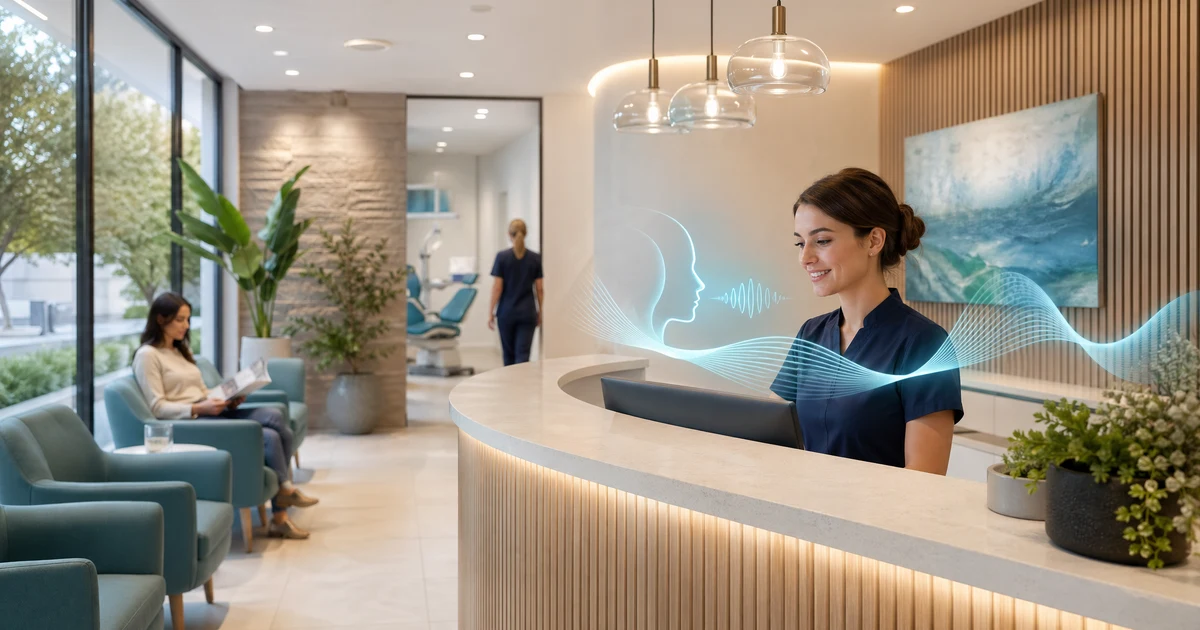
Every time the phone rings in your dental practice and nobody picks up, money walks out the door. Not a few euros — potentially €150 to €200 per unanswered call. For busy practices across Dublin, Cork, Galway, and Limerick, missed calls dental practice problems are silently draining tens of thousands in revenue every single year.
And the worst part? Most practice owners have no idea how much they're actually losing.
How Many Calls Are Irish Dental Practices Really Missing?
The numbers are sobering. Industry research consistently shows that dental practices miss between 30% and 40% of all inbound phone calls. A 2024 survey by the British Dental Association found that practices with a single receptionist missed an average of 35% of calls during peak hours — and there's no reason to believe Irish practices fare any better.
Think about that for a moment. If your practice receives 50 calls per week, you're likely missing 15 to 20 of them. Each of those callers is a potential patient — someone actively reaching for their phone to book an appointment, ask about a treatment, or respond to a recall notice. When they can't get through, they don't leave a voicemail. Research from BrightLocal shows that 80% of callers sent to voicemail simply hang up and call the next practice on Google.
For practices in competitive urban areas like Dublin's south side or Cork city centre, those missed calls dentist Ireland problems don't just mean lost revenue — they mean patients going directly to a competitor.
👉 Hear how VoiceFleet handles dental calls — try the live demo
The Real Financial Cost of Missed Dental Calls
Let's put hard numbers on the problem. The cost of missed dental calls is far greater than most practice owners realise.
The New Patient Value Calculation
According to the Irish Dental Association, the average new patient generates between €150 and €200 in first-year revenue through initial examinations, X-rays, hygiene appointments, and follow-up treatments. Many new patients go on to become long-term patients worth €500 to €1,000+ over their lifetime.
Now apply that to your missed calls:
| Missed Calls per Week | Revenue Lost per Week | Revenue Lost per Year |
|---|---|---|
| 5 | €750 – €1,000 | €39,000 – €52,000 |
| 10 | €1,500 – €2,000 | €78,000 – €104,000 |
| 15 | €2,250 – €3,000 | €117,000 – €156,000 |
| 20 | €3,000 – €4,000 | €156,000 – €208,000 |
A mid-sized practice missing just 10 calls per week — a perfectly common scenario — stands to lose approximately €78,000 per year. That's not a rounding error. That's a full-time salary, a surgery upgrade, or a significant pension contribution.
It's Not Just New Patients
Missed calls don't only affect new patient acquisition. Existing patients who can't get through may:
- Skip recall appointments — directly impacting your hygiene schedule and preventive revenue
- Delay treatment acceptance — that crown preparation they were finally ready to book goes unscheduled
- Switch practices entirely — patient loyalty only stretches so far when they can never get through
- Leave negative Google reviews — "Impossible to get through on the phone" is one of the most common complaints in Irish dental practice reviews
The cumulative effect on practice reputation and patient retention compounds the financial damage well beyond the initial missed call.
When Are Dental Practices Missing the Most Calls?
Understanding when calls go unanswered reveals why dental practice phone management is such a persistent challenge. Missed calls cluster around predictable peak times:
Monday Mornings (9:00–11:00)
The single busiest call period for any dental practice. Patients who experienced pain over the weekend, those responding to Saturday recall texts, and people planning their week all call first thing Monday. Your reception team is simultaneously checking in the first patients, processing weekend emergency messages, and handling the rush. The phone becomes a secondary priority.
Lunch Hours (12:30–14:00)
When patients are on their own lunch break, they finally have time to call the dentist. Unfortunately, this is exactly when many practices run on skeleton reception staff — or close the desk entirely. One receptionist covering lunch is expected to answer phones, check out morning patients, and set up for the afternoon. Something gives, and it's usually the phone.
Late Afternoon (16:30–17:30)
Parents finishing work try to book children's appointments. Patients call back after missing your earlier return call. Meanwhile, reception is processing end-of-day payments and filing. Calls go unanswered.
After Hours and Weekends
A significant portion of dental-related searches and calls happen outside standard practice hours — evenings and weekends. Every single one of these calls goes to voicemail (if you have one) or simply rings out. These callers almost never try again.
Why Reception Staff Can't Keep Up: The Dental Reception Overload Problem
Before you blame your reception team, understand what you're asking them to do. Dental reception overload Ireland is a systemic problem, not a staffing failure. A typical dental receptionist in a busy Irish practice juggles:
- Answering incoming calls (new patients, existing patients, suppliers, labs, specialists)
- Greeting and checking in arriving patients
- Processing payments and issuing receipts (including AI receptionist for medical practices card and PRSI claims)
- Managing the appointment book across multiple clinicians
- Handling patient queries at the desk — often lengthy conversations about treatment plans and costs
- Filing insurance claims and dealing with VHI, Laya, and Irish Life paperwork
- Scanning and filing patient records in compliance with Irish Dental Council and GDPR requirements
- Ordering supplies and managing deliveries
When a patient is standing in front of them needing to pay, and the phone is ringing, and another patient has just walked in for their 2:30 appointment — the phone loses. Every time. This isn't a training issue; it's a capacity issue.
Hiring a second receptionist is the traditional solution, but at €28,000 to €35,000 per year (plus employer's PRSI, holiday cover, sick leave, and training costs), it's a significant overhead — especially when much of their day may be quiet. You're paying a full salary to cover peak-hour phone surges that last a few hours per day.
GDPR-Compliant Solutions for Irish Dental Practices
Any solution to the missed calls problem must be fully GDPR-compliant — a non-negotiable requirement for Irish dental practices operating under the Data Protection Commission's oversight. Patient phone calls involve sensitive health data (special category data under GDPR Article 9), and mishandling them carries serious regulatory risk.
When evaluating dental practice phone management solutions, Irish practices must verify:
- EU data residency — patient data must be stored within the European Union, not on US servers
- Data Processing Agreements (DPAs) — any third-party handling calls must have a proper DPA in place
- Call recording consent — if calls are recorded, explicit consent must be obtained in line with Irish law
- Right to erasure — patients must be able to request deletion of their data
- Irish Dental Council compliance — any system managing patient communications must align with the Council's guidelines on patient confidentiality
This rules out many US-based call answering services and generic AI tools that process data outside the EU.
How AI Receptionists Solve the Missed Calls Problem
An AI voice agent for dental practices offers something no human receptionist can: the ability to answer every single call, 24 hours a day, 7 days a week — without putting anyone on hold, without lunch breaks, and without Monday morning overwhelm.
Here's how a purpose-built AI receptionist like VoiceFleet works in a dental practice:
Instant Call Answering
Every call is answered within two rings — no hold music, no "all our lines are busy" messages. The AI greets callers naturally, identifies their needs, and handles the interaction conversationally.
Intelligent Appointment Booking
The AI integrates with your practice management software to check real-time availability and book appointments directly. Patients calling at 9pm on a Sunday can book their Monday hygiene appointment without waiting until your reception opens.
Triage and Routing
Emergency calls are identified and escalated immediately to the on-call dentist. Routine queries — directions, opening hours, treatment pricing — are handled without bothering your team. Complex enquiries are flagged for a return call from reception during quieter periods.
Recall and Follow-Up
Outbound calls to patients due for check-ups, those who haven't confirmed appointments, or those with outstanding treatment plans. This proactive calling recovers revenue that would otherwise quietly disappear from your books.
Multilingual Support
In diverse urban areas like Dublin and Cork, the ability to handle calls in multiple languages is increasingly valuable.
The ROI Comparison: AI Receptionist vs Additional Staff
Let's compare the three options directly:
| Do Nothing | Hire Receptionist | VoiceFleet AI | |
|---|---|---|---|
| Annual cost | €0 | €28,000 – €35,000 | €1,188 (€99/mo) |
| Revenue lost to missed calls | €78,000+ | €20,000 – €30,000 (still misses after-hours) | Near zero |
| Hours of coverage | Office hours only | Office hours only | 24/7/365 |
| Sick days / holidays | N/A | 25+ days/year | None |
| Scaling cost | N/A | Linear (more staff) | Flat |
| GDPR compliance | N/A | Training required | Built in |
| Setup time | N/A | 4-8 weeks hiring | 48 hours |
Even the most conservative estimate shows VoiceFleet delivering a return of over 60x the investment. A second receptionist helps — but still can't answer calls at 8pm, on bank holidays, or when they're off sick. The missed calls simply shift to different hours.
At €99 per month, an AI receptionist costs less than a single missed new patient call. The maths speaks for itself.
Ready to Stop Losing €78,000 a Year to Missed Calls?
Every week you wait, another 10-15 calls go unanswered. That's another €1,500 to €3,000 walking out the door — to competitors who pick up the phone.
VoiceFleet is purpose-built for Irish dental practices. GDPR-compliant, EU-hosted, and designed to integrate with your existing practice management software.
Pricing and Demo
Plans start at €99/month
Compare plans right here, then either try the live demo or book a guided walkthrough.
Start a 7-Day Free Trial
Test real calls, keep your local number, and cancel anytime — no setup fee.
Simple, Transparent Pricing
No hidden fees. No contracts. Pay only for what you use. Cancel anytime.
Starter
Basic AI call answering
500 minutes included (~200 calls)
€0.20/min overage
For simple call answering. Add-ons stay flexible, but Growth is better value once you need automation.
- 500 minutes/month (~200 calls)
- 3 parallel calls
- 24/7 AI receptionist
- Basic appointment capture
- Emergency flagging
- Calendar integration
- 7-day call recordings
- Email support
Growth
Book, transfer, qualify, automate
1,000 minutes included (~400 calls)
€0.30/min overage
Most teams choose Growth: human transfer, priority support, and more capacity without Pro pricing.
- 1,000 minutes/month (~400 calls)
- 5 parallel calls
- 24/7 AI receptionist
- Human transfer access
- Custom call flows
- 30-day call recordings
- Priority support
Pro
ScaleHigh-volume and custom operations
2,000 minutes included (~800 calls)
€0.30/min overage
Choose Pro for higher volume, custom voice, priority rollout, and multi-workflow operations.
- 2,000 minutes/month (~800 calls)
- 10 parallel calls
- 24/7 AI receptionist
- AI Schedule workflows
- Voice cloning & custom scripts
- Human transfer access
- 90-day call recordings
- Early access to features
- Dedicated support and rollout help
Early-stage, pilot-first rollout
VoiceFleet is built for practical evaluation: hear it live, start with a controlled workflow, and keep direct setup support close.
Start with a safe pilot
Use a controlled call flow for missed calls, quote requests, or one booking lane before routing more traffic.
Hear the assistant live
Test a browser demo and review example scripts before deciding whether it fits your front-desk workflow.
Direct setup support
Get hands-on configuration help for greetings, escalation rules, integrations, and call summaries.
Included with Every Plan
All the essentials to get you started right away
No contracts. No setup fees. Live in 48 hours.
Frequently Asked Questions
How many calls does a typical Irish dental practice miss?
Industry data suggests that dental practices miss between 30% and 40% of inbound calls, with single-receptionist practices at the higher end. For a practice receiving 50 calls per week, that translates to 15-20 missed calls — each representing €150-€200 in potential new patient revenue.
What is the real cost of a missed call for a dental practice?
Each missed call from a potential new patient represents an estimated €150 to €200 in first-year revenue, based on typical examination, hygiene, and treatment fees. Over a patient's lifetime, that figure can exceed €1,000. A practice missing 10 calls per week could lose approximately €78,000 annually.
When do dental practices miss the most calls?
The highest missed call rates occur during Monday mornings (9:00–11:00), lunch hours (12:30–14:00), late afternoon (16:30–17:30), and outside office hours. These patterns align with times when reception staff are busiest with in-person patient tasks or the practice is closed.
Is an AI receptionist GDPR-compliant for an Irish dental practice?
It depends on the provider. VoiceFleet is fully GDPR-compliant with EU data residency, proper Data Processing Agreements, and alignment with Irish Data Protection Commission and Irish Dental Council requirements. Practices should avoid solutions that store patient data outside the EU.
How does an AI dental receptionist compare to hiring another staff member?
An additional receptionist costs €28,000–€35,000 per year and only covers office hours. VoiceFleet costs €99 per month (€1,188/year), operates 24/7/365, never takes sick leave, and handles unlimited concurrent calls. Both reduce missed calls, but only an AI receptionist eliminates after-hours and weekend gaps.
Can an AI receptionist book dental appointments directly?
Yes. VoiceFleet integrates with popular dental practice management systems to check real-time availability and book, reschedule, or cancel appointments — even at 10pm on a Saturday when no human staff are available.
How quickly can a dental practice set up VoiceFleet?
Most practices are live within 48 hours. Setup includes configuring your greeting, appointment types, opening hours, and practice management integration. No hardware is required — VoiceFleet works with your existing phone line.

