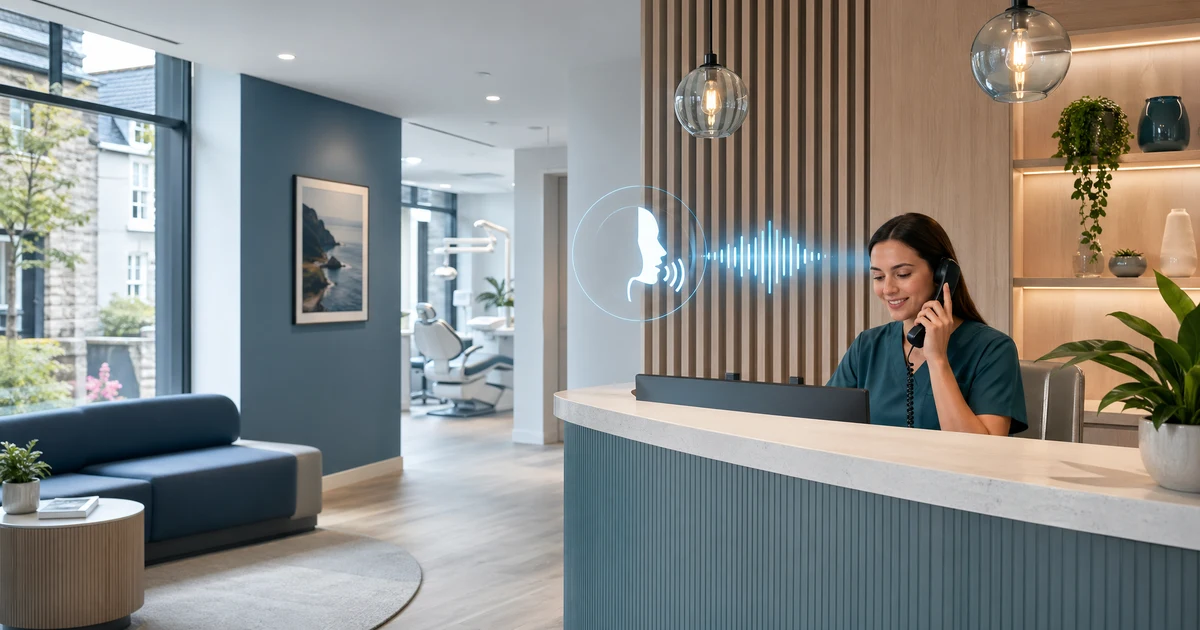
An empty dental chair costs money. Not in some abstract, theoretical way — in a very specific, calculable way. And for most Irish dental practices, the number is far larger than they realise.
The average Irish dental practice loses €30,000 or more per year to schedule gaps — cancellations, no-shows, and unfilled appointment slots that could have generated revenue. That's a new dental chair, a year of marketing spend, or the difference between hiring an associate and not.
This article breaks down exactly where those gaps come from, why traditional methods of filling them don't work, and how AI-powered gap prevention is changing the equation for Irish practices in 2026.
The Anatomy of a Schedule Gap
Schedule gaps aren't random. They follow predictable patterns:
Same-Day Cancellations
The biggest culprit. A AI receptionist for medical practices calls at 8:30am to cancel their 10:00am appointment. Your receptionist has 90 minutes to fill the slot — while also greeting patients, answering other calls, processing payments, and managing the waiting room.
Reality: That slot stays empty 70-80% of the time.
No-Shows
The patient simply doesn't turn up. No call, no message. Your team doesn't know the slot is open until 10 minutes after the appointment time, when it's too late to fill it.
Average no-show rate in Irish dental practices: 8-15% (higher for NHS/DTSS patients, lower for private).
Chronic Under-Booking
Many practices have recurring gaps — typically Tuesday mornings, Friday afternoons, or the week after a bank holiday. These aren't cancellations; they're structural scheduling problems that nobody addresses because they seem normal.
Short-Notice Availability
A hygienist finishes 15 minutes early. A procedure takes less time than expected. A patient declines an additional treatment. These micro-gaps add up to 2-3 lost hours per week in a busy practice.
The Real Financial Impact
Let's do the maths for a typical two-dentist Irish practice:
Revenue Per Hour
| Treatment Type | Average Fee | Time | Revenue/Hour |
|---|---|---|---|
| Check-up + clean | €80-€120 | 30 min | €160-€240/hr |
| Filling (composite) | €120-€180 | 30-45 min | €160-€240/hr |
| Crown | €600-€900 | 60 min | €600-€900/hr |
| Root canal | €400-€700 | 60-90 min | €400-€470/hr |
| Extraction | €100-€200 | 20-30 min | €200-€400/hr |
| Whitening | €300-€500 | 60 min | €300-€500/hr |
Blended average: approximately €200-€300 per clinical hour.
Gap VoiceFleet pricing Calculation
| Metric | Value |
|---|---|
| Average gaps per day (2-dentist practice) | 2-3 slots |
| Average slot duration | 30 min |
| Lost clinical hours per week | 5-7.5 hrs |
| Lost revenue per week (at €250/hr avg) | €1,250-€1,875 |
| Lost revenue per year (48 weeks) | €60,000-€90,000 |
Even if you could fill just half of those gaps, you're looking at €30,000-€45,000 in recovered revenue annually.
Why Traditional Gap-Filling Doesn't Work
The Phone Call Approach
The standard process: receptionist opens the day's schedule, spots a gap, picks up the phone, calls patients on the waitlist one by one.
Problems:
- Takes 5-10 minutes per patient called (voicemail, call back, negotiate time)
- Most patients don't answer during work hours
- By the time someone confirms, the gap is an hour away
- Receptionist is pulled away from other duties
- Process is completely abandoned on busy days
The Text Message Approach
Some practices send a batch SMS: "We have an opening at 2pm today — reply YES to book."
Better, but:
- SMS open rates are high (~98%), but response rates for last-minute dental appointments are low (~5-8%)
- No way to handle the booking conversation (patient replies "Can I come at 3 instead?")
- No integration with the practice management system
- Patients on the waitlist get spammed and eventually opt out
The "Hope" Approach
The most common strategy of all: leave the gap open and hope a walk-in or phone call fills it.
Success rate: About 10-15%. Not a strategy.
How AI-Powered Gap Prevention Works
AI gap prevention isn't a single feature — it's a system that handles the entire workflow, from detecting the gap to filling it, without your receptionist lifting a finger.
Step 1: Automatic Gap Detection
The AI monitors your schedule in real time. When a cancellation occurs — whether the patient calls, texts, or cancels online — the system immediately identifies:
- The gap duration and time
- The treatment type that was booked
- Which waitlisted patients could fill it (based on treatment needed, availability preferences, and location)
Step 2: Intelligent Patient Matching
Not every patient on your waitlist is suitable for every gap. The AI considers:
- Treatment match: A 30-minute hygiene slot can't be filled with a patient needing a 90-minute crown prep
- Patient preferences: Some patients can only come mornings; others need Fridays
- Proximity: A patient in Galway isn't driving to Dublin for a same-day check-up
- Priority: Patients waiting longest or with urgent needs get contacted first
- Insurance: VHI/Laya/Irish Life Health verification can happen automatically before outreach
Step 3: Multi-Channel Outreach
Here's where AI pulls ahead of manual methods. The system contacts matched patients via:
- Phone call — The AI calls the patient, explains the opening, and books them directly if they accept
- SMS/WhatsApp — Sends a message with a one-tap booking link
- Email — For patients who prefer email communication
All three can happen simultaneously or in sequence, depending on your preferences. The AI handles responses, negotiations ("Can I come 30 minutes later?"), and confirmations.
Step 4: Automatic Confirmation and Updates
Once a patient accepts:
- The appointment is booked in your PMS
- The patient receives a confirmation with practice details
- The original cancellation is logged for reporting
- Your receptionist gets a notification that the gap is filled
Total time from cancellation to filled slot: typically 15-45 minutes. Compare that to the 2-3 hours of manual phone calls — if your team even has time to attempt them.
Real-World Impact: The Numbers
Practices using AI gap prevention typically see:
| Metric | Before AI | After AI |
|---|---|---|
| Same-day cancellation fill rate | 15-25% | 60-75% |
| Average gaps per day | 2-3 | 0.5-1 |
| Receptionist time on gap-filling | 4-6 hrs/week | 0 hrs/week |
| Monthly recovered revenue | €0-€1,500 | €3,000-€5,000 |
| Annual recovered revenue | — | €36,000-€60,000 |
📞 Want to hear an AI fill a cancellation? Try VoiceFleet's free demo call — experience a simulated gap-fill call in 90 seconds. No credit card, no commitment.
Building a Smarter Waitlist
AI gap prevention is only as good as your waitlist. Here's how to build one that actually works:
Capture Waitlist Patients Automatically
When a patient calls and no suitable appointment is available, your AI receptionist should automatically ask:
- "We don't have openings this week, but I can add you to our priority list. If a slot opens up, we'll contact you immediately. Would you like that?"
- Record their preferred days, times, and treatment needed
- Note their contact preference (call, text, WhatsApp)
Keep the Waitlist Fresh
A waitlist older than 4-6 weeks is mostly dead. Patients have either found another dentist or their urgency has passed. The AI should:
- Automatically remove patients who've booked through other means
- Send a monthly "Are you still interested?" check to long-waiters
- Prioritise recent additions over stale entries
Segment by Treatment Type
Your waitlist should be categorised:
| Segment | Typical Wait | Fill Priority |
|---|---|---|
| Emergency/pain | Same day | Highest |
| Hygiene/check-up | 1-2 weeks | High (easy to fill) |
| Restorative (fillings, crowns) | 2-4 weeks | Medium |
| Cosmetic (whitening, veneers) | Flexible | Lower (patient-led) |
| Orthodontic consult | Flexible | Lower |
This ensures that when a hygiene slot opens, you're not calling patients who need a crown prep.
Implementation for Irish Practices
What You Need
- A practice management system that supports API access or calendar sync (SOE Exact, Dentally, Carestream, and most modern PMS platforms do)
- An AI phone system that can make outbound calls and handle inbound bookings — VoiceFleet is built specifically for Irish dental practices
- Patient consent — Under GDPR, you need consent to contact patients about available appointments. Add this to your registration form: "We may contact you about earlier appointment availability. You can opt out at any time."
GDPR Compliance
Automated outreach to patients requires:
- Consent for marketing-style communications (waitlist outreach is arguably a service communication, but best practice is explicit opt-in)
- Right to opt out — every message must include an unsubscribe option
- Data minimisation — only store what you need (name, phone, treatment, preferences)
- Processing records — log all automated communications for DPC compliance
Getting Started
You don't need to automate everything on day one. Start with:
- Week 1: Build your waitlist (even a spreadsheet works initially)
- Week 2: Set up automated SMS notifications for cancellations
- Week 3: Add AI phone outreach for same-day gaps
- Week 4: Connect everything to your PMS for end-to-end automation
The Competitive Advantage
Here's the thing about schedule gaps: every practice has them. But the practices that fill them win twice — they recover the lost revenue AND they serve patients who would otherwise wait weeks for an appointment.
In Ireland's increasingly competitive dental market — with new practices opening and patients shopping around — filling gaps isn't just about revenue. It's about patient experience. The practice that can offer "we had a cancellation, can you come in tomorrow?" is the practice that earns loyalty.
The practices still calling through waitlists manually are leaving €30,000+ per year on the table. In 2026, that's a choice, not a limitation.
VoiceFleet's AI receptionist detects schedule gaps instantly, contacts waitlisted patients by phone and SMS, and fills cancellations automatically — all while answering your incoming calls 24/7. Start a 30-day free trial or try a demo call now. No credit card. GDPR compliant. Built for Irish dental practices.

